
BrandZap
George Little
Case Study
Industry
Speaking, Workshops & Professional Services
Core Technology
Webflow, CMS, HubSpot
Engagement
Website Architecture, Design & Development
Focus
Service Clarity & Booking Journey
Fiona was starting her consultancy when she approached BrandZap to help overhaul her website and build a new brand. She’d already made a DIY website herself, which gave her somewhere to send people, and gave us something real to work from. We started by talking through what she envisioned her brand to be, what it should stand for, then built a visual identity and a small website around it.

About a year later, Fiona came back. The framework at the center of the business was still important, and the site had a more specific job to do. Someone might now be coming to find out whether she could speak at their event or run a workshop with their team. We picked up the brand we’d built together and looked at what each of those people needed from the site.
When you’re starting a consultancy, you can explain a lot in conversation. You can hear what someone’s struggling with and talk about your work in language that makes sense to them. On the first ReflectPath site, a visitor needed to make that connection on their own. They might be working through a difficult decision or a career transition. The site needed to help them recognize where Fiona could help and give them a clear way to start a conversation.
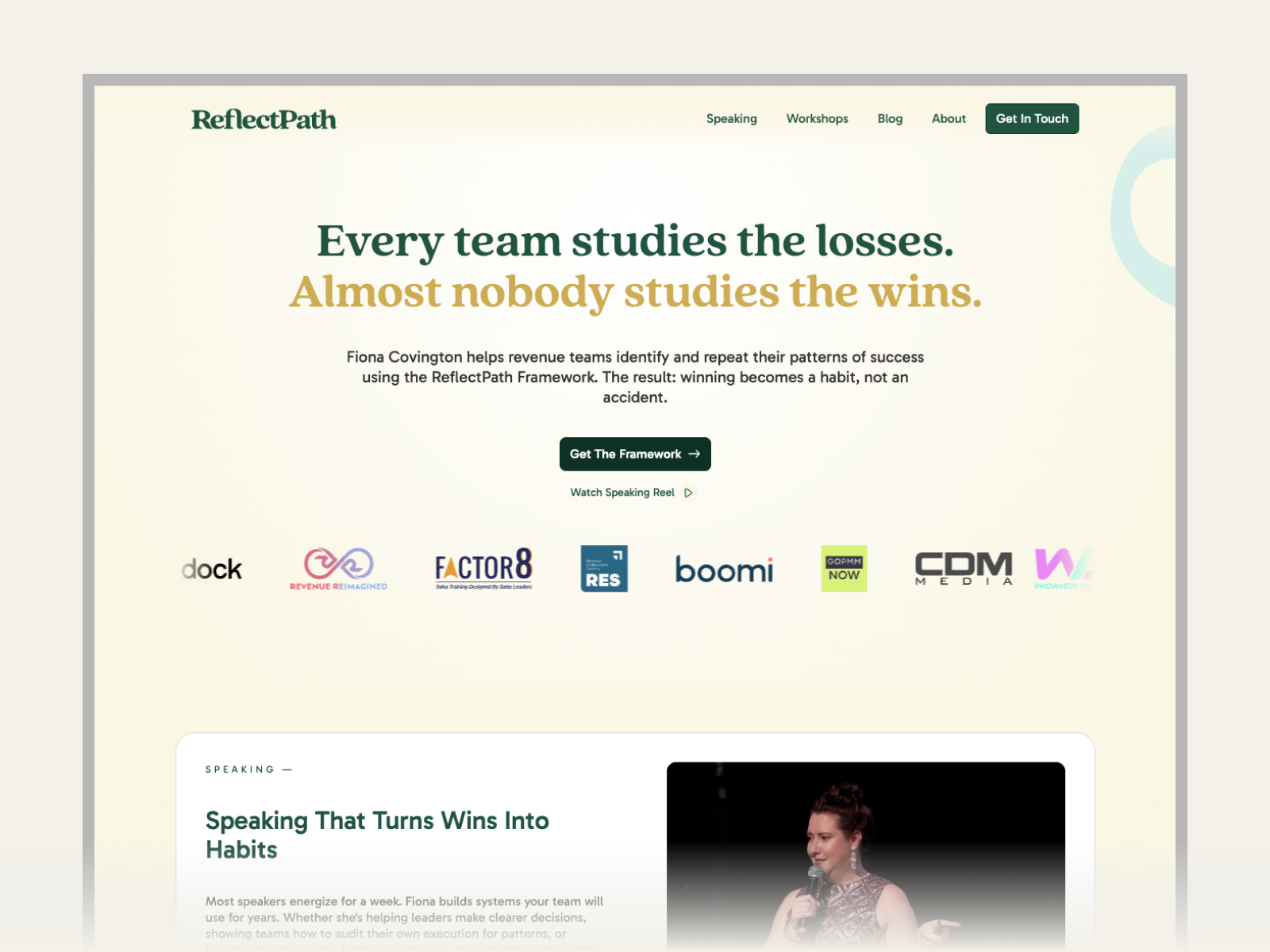
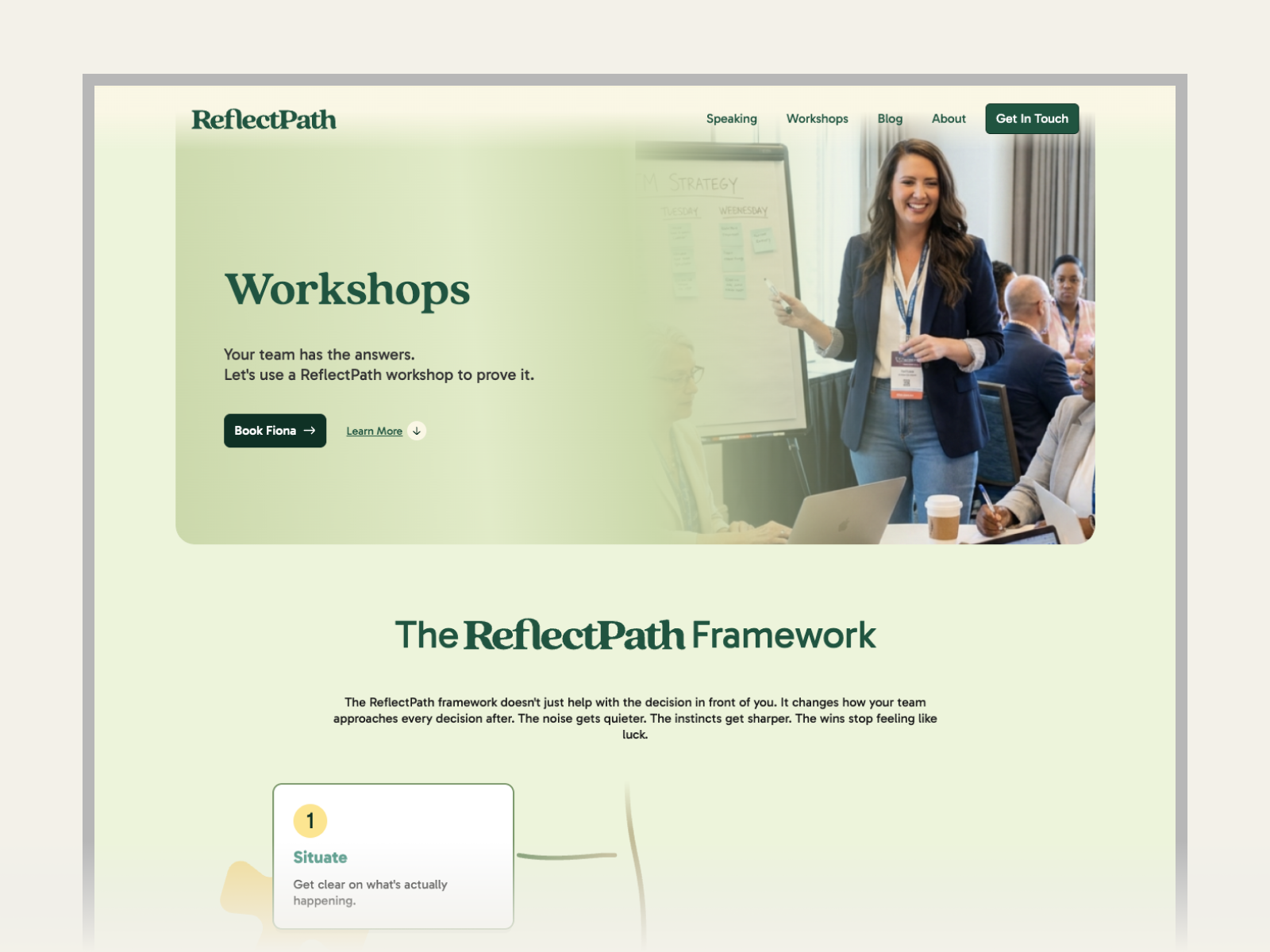
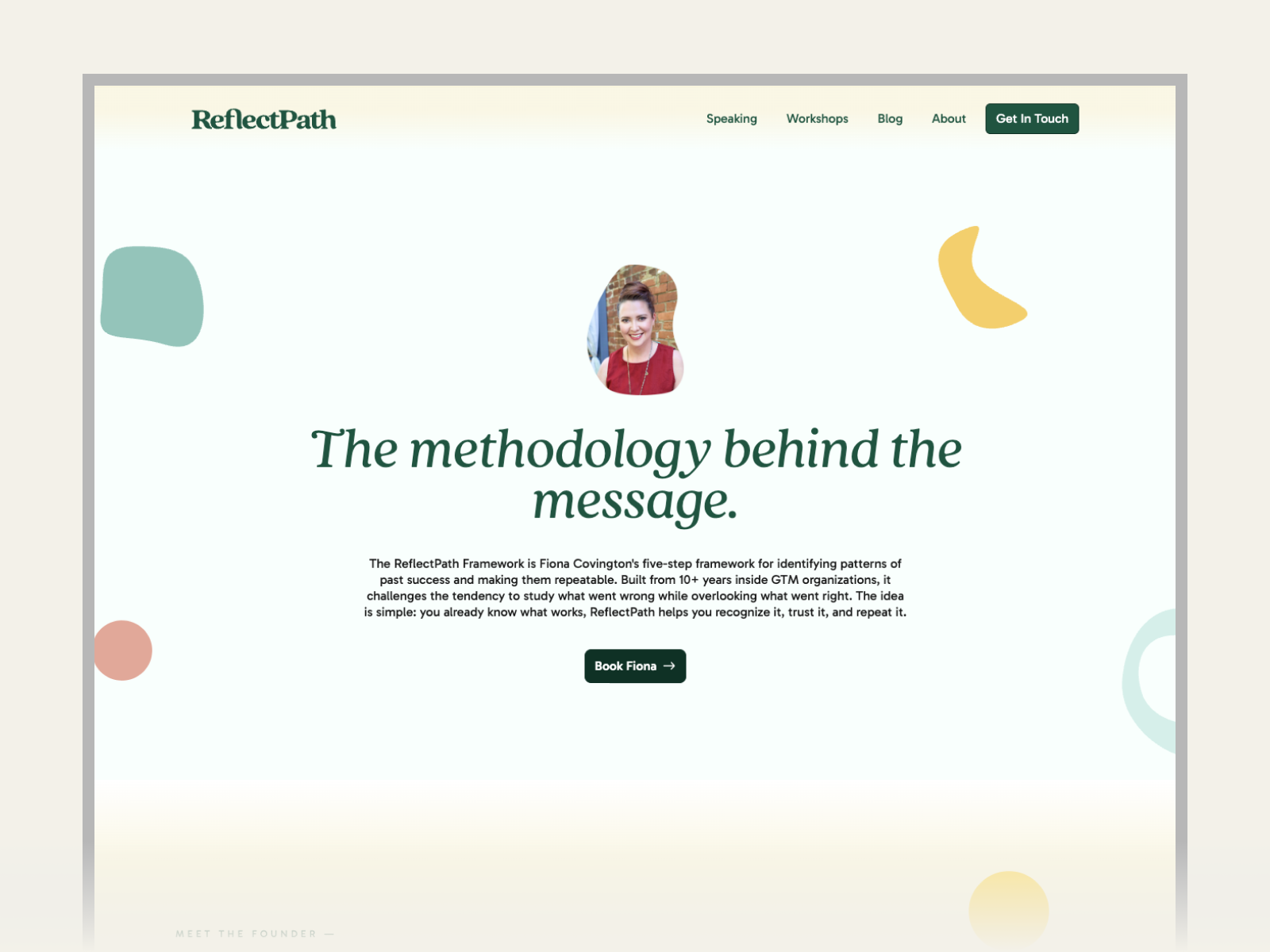
The second time around, the questions got more specific. Someone booking a speaker wants to picture Fiona in front of a room and get a sense of how she talks about the subject. Someone looking for a workshop wants to picture their team taking part. Both might be interested in the same framework. They need different things from the page before they’re ready to reach out.
The first time through, we worked on the positioning together. We talked about who Fiona wanted to reach, what those people might be facing, and what she wanted them to take away from an encounter with ReflectPath. That gave us something to come back to when we were making decisions about the identity and writing the structure of the site.
I also mapped her existing website. I start by writing down what’s there and tracing the routes someone can take through it. Where might they land? What can they learn on that page? How many pages would they have to visit to understand the service or figure out how to get in touch? Once those routes are on paper, we can draw alternatives and see which ones ask less of the visitor. For ReflectPath, that meant planning a compact site where someone could get oriented, see how Fiona might help, and find their way to an inquiry.
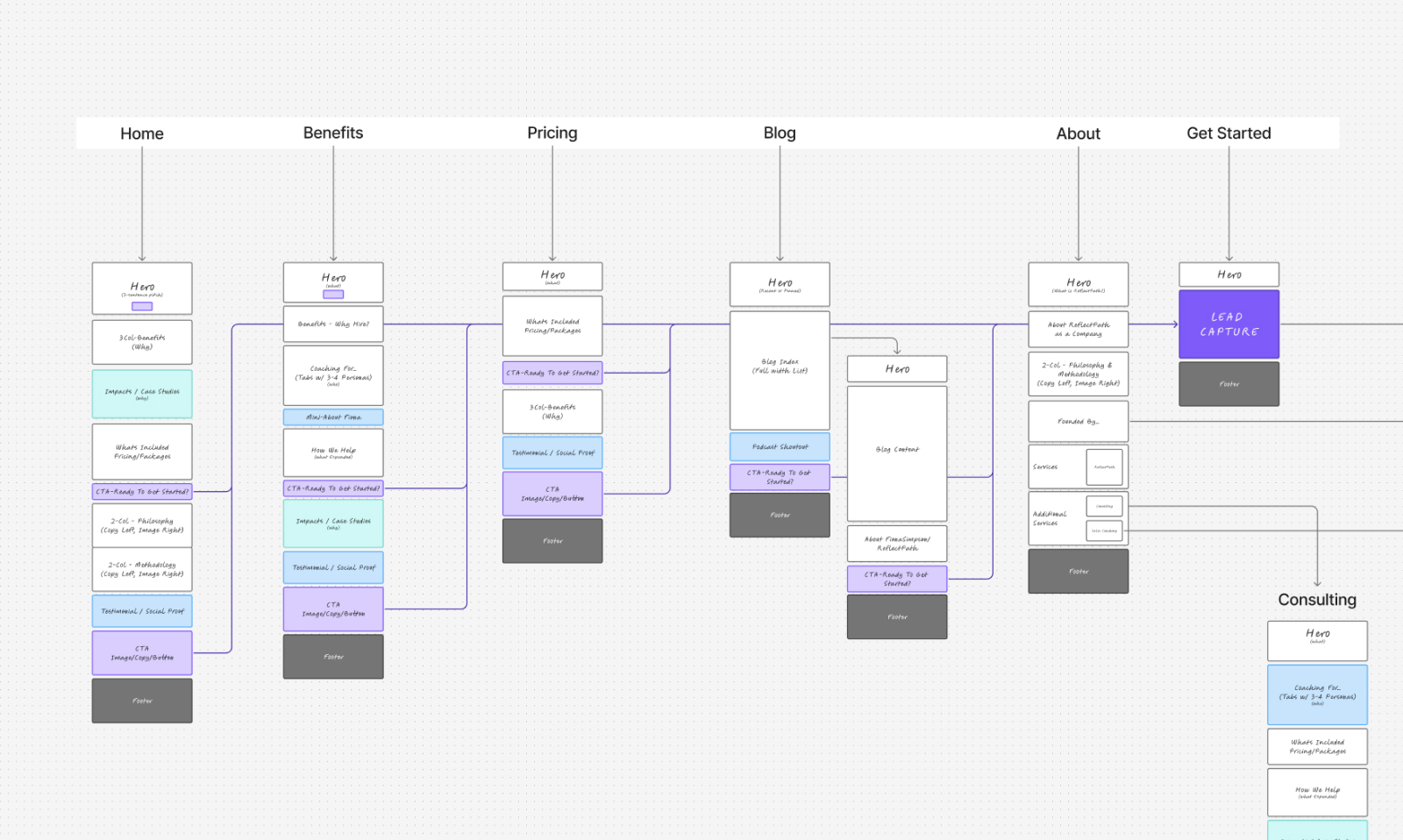
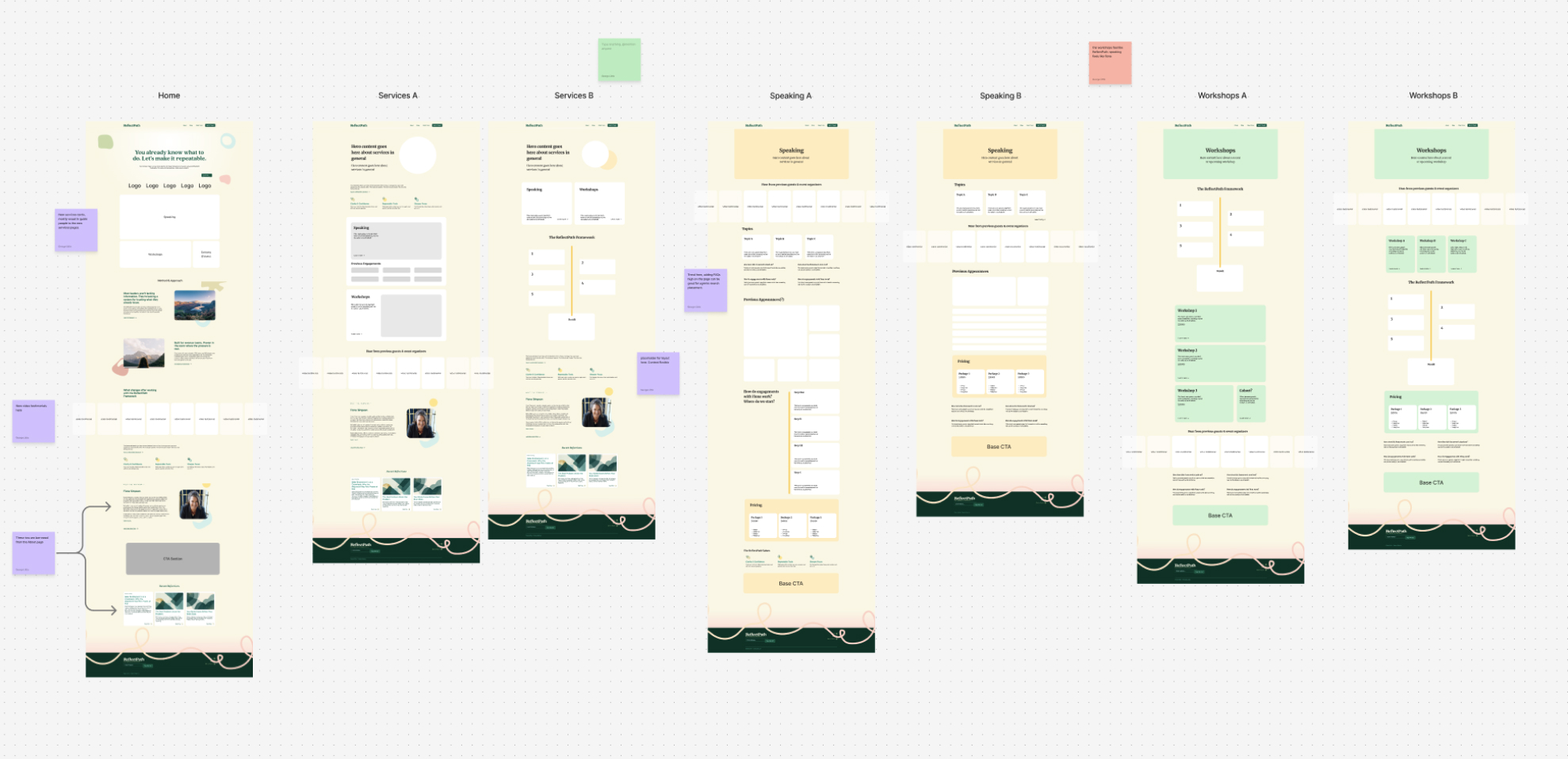
When Fiona returned, we drew those routes again with speaking and workshops in mind. The homepage could introduce the framework, but the service pages needed to be useful on their own. If Fiona sent a speaking link to an event organizer, that person should be able to understand the offer and know how to start a conversation from that page.
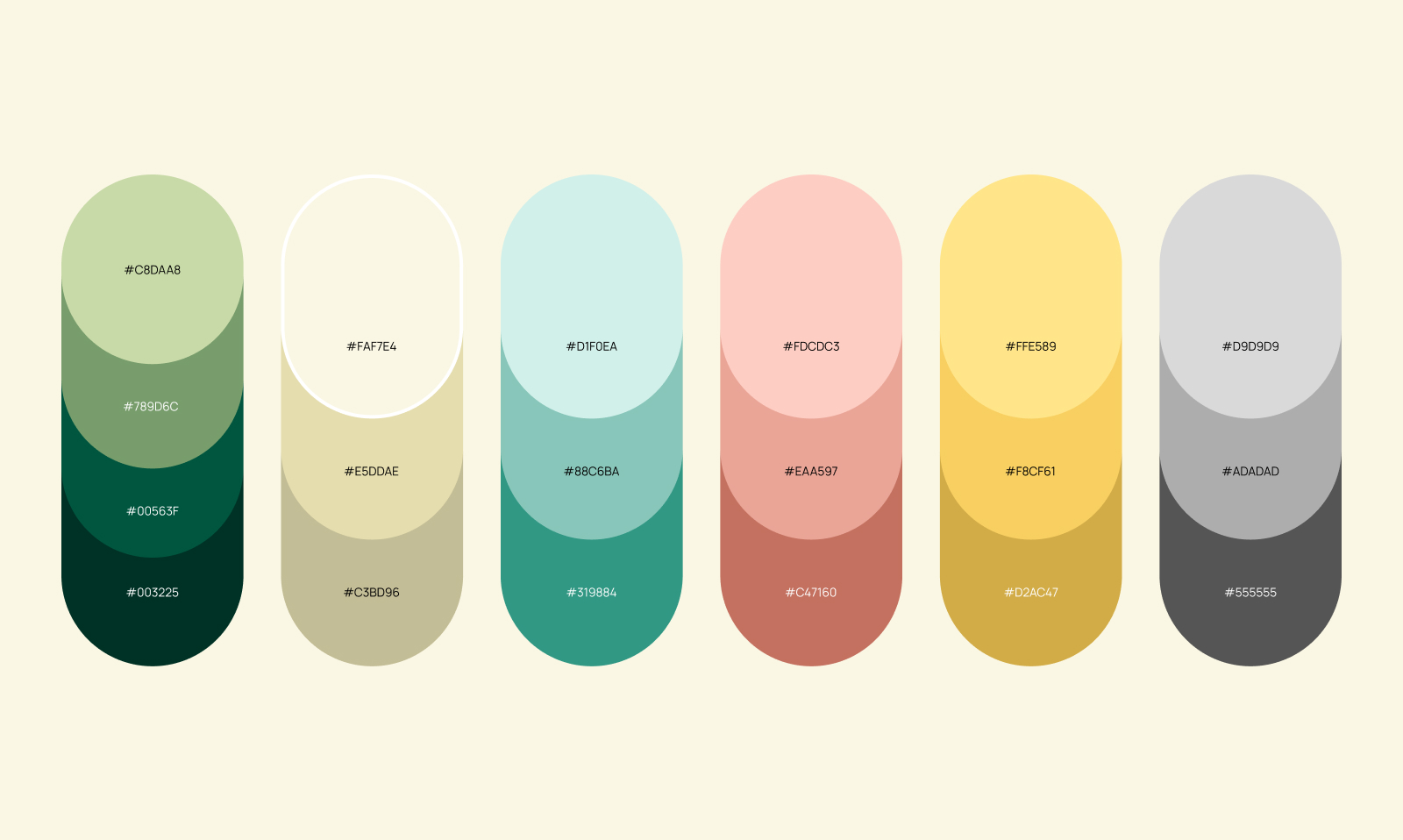
The original identity paired a deep green serif wordmark with pale greens and pinks, a warm yellow, and a set of soft shapes and looping lines. We applied it to things Fiona might actually use, including a presentation and a LinkedIn banner. The presentation needed to work across several slides, while the banner had one wide, shallow space to make an impression. Looking at both helped us see how much of the identity we could carry with a few recognizable elements.
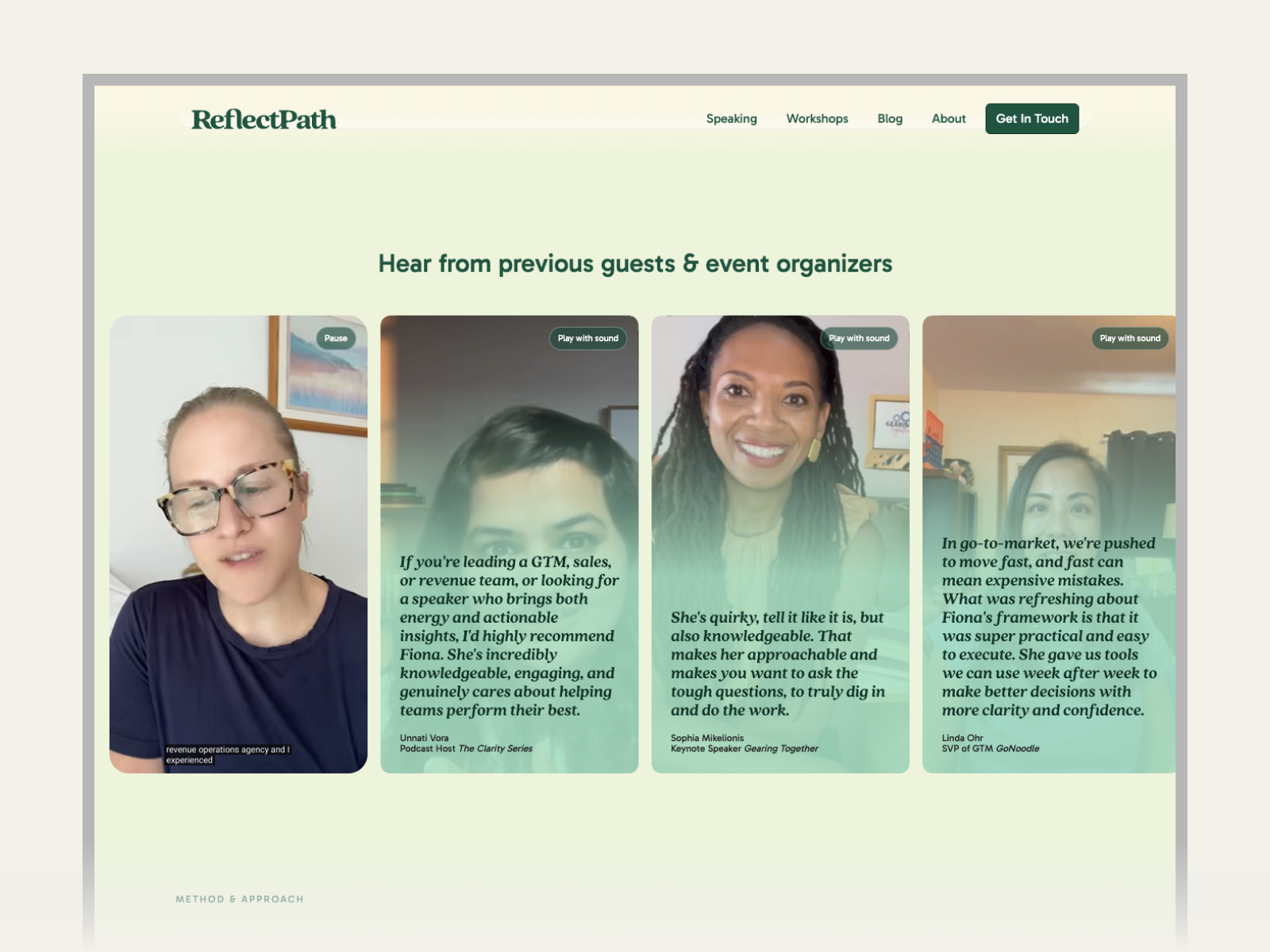
For the later site work, we gave speaking and workshops their own layouts and brought the original visual language into the photo treatments, service cards, and spaces between sections. We made room for the kinds of examples that would help someone decide whether to get in touch. A video can give an organizer a feel for Fiona’s delivery. A testimonial can help someone understand what a team got out of a workshop. We structured those pieces in the site’s content management system so they could be added once and used where they mattered.
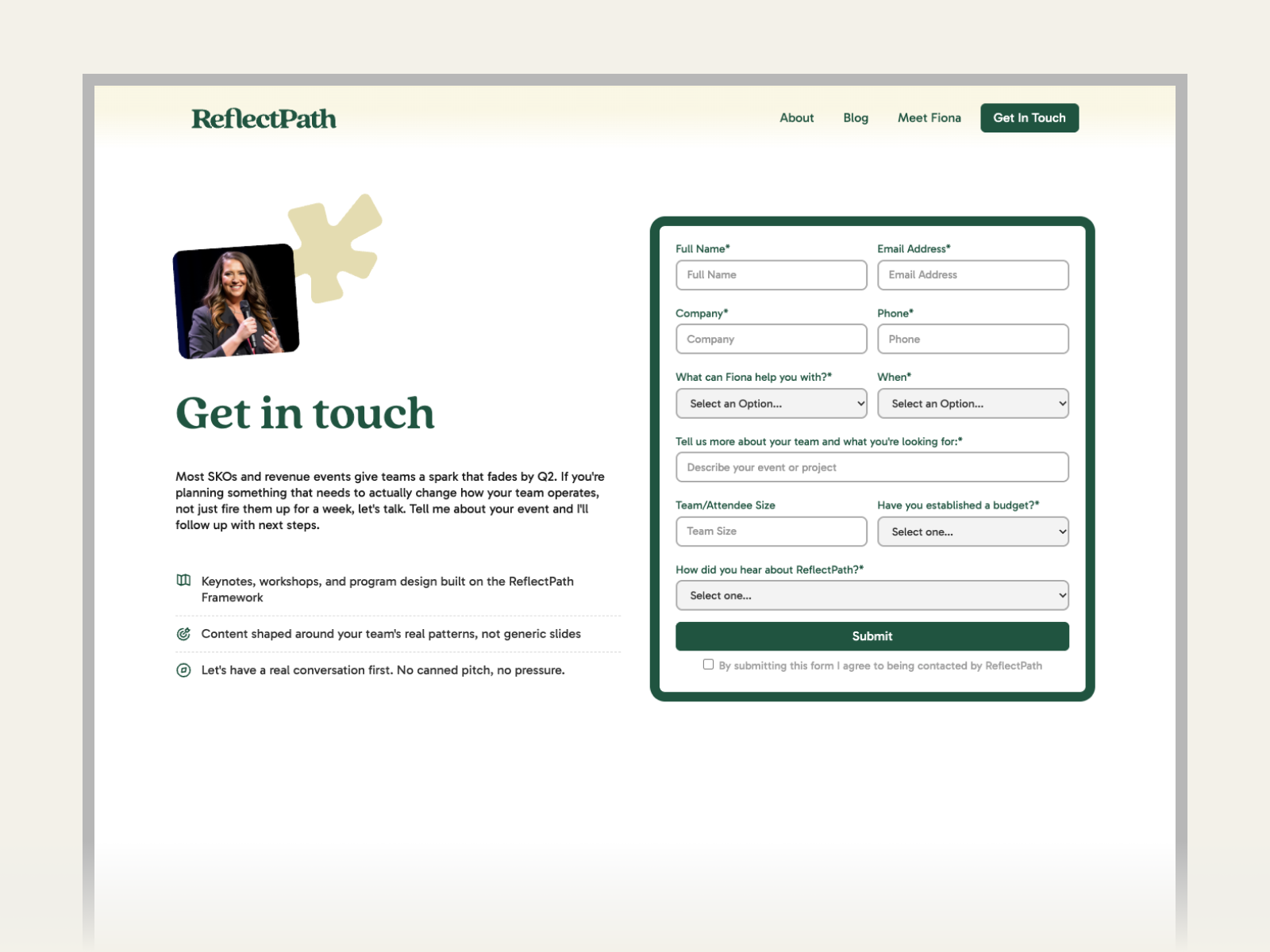
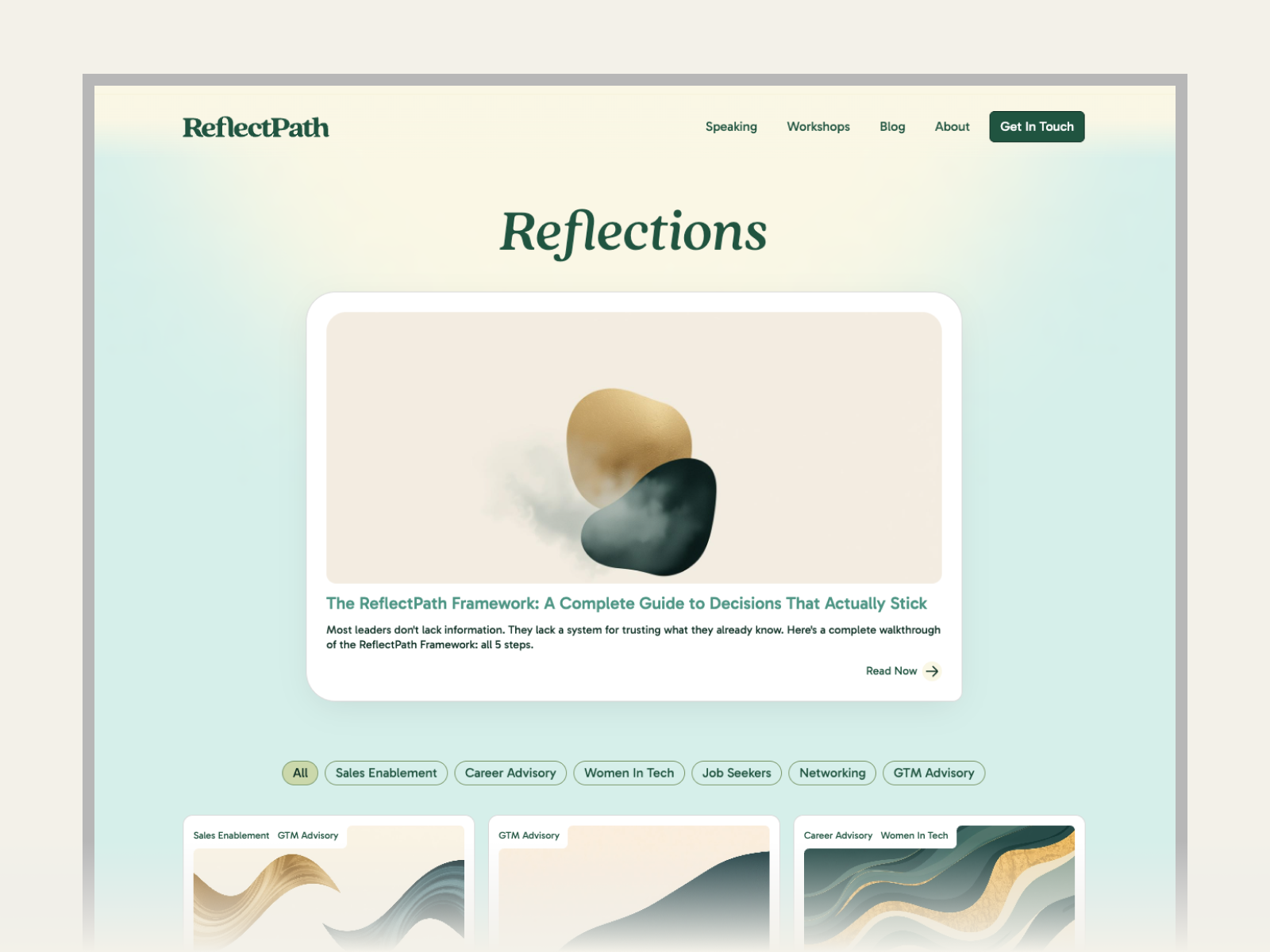
The next step was designed around a short discovery call. Someone could arrive with an event in mind, or with a team problem they were still trying to describe, and have a way to talk it through with Fiona. We kept the existing HubSpot connection behind the contact experience as we worked on how someone would get there.
The first engagement gave Fiona an identity she could use beyond the website and a site that introduced her new consultancy in her own terms. The second gave the framework, speaking, and workshops distinct places in the site structure, with each route leading back to a conversation with her.
I like seeing the two rounds next to each other. In the first, we were working out how someone would come to understand ReflectPath. A year later, that gave us something to build on when people needed to see how the work might show up in a room with their team.


