
BrandZap
George Little
Case Study
Stacked.camp needed to grow organic traffic, but the opportunity was more specific than simply “getting more visitors.” The site already had location-based CMS pages for firewood availability, but those pages needed more surrounding context to become visible and useful in search.
The audience was fairly clear: campers, RV travelers, environmentally aware homeowners, and people looking for firewood for outdoor use. These visitors were not only searching for firewood directly. They were also searching around the broader outdoor experience — where to camp, how to safely build a fire, what kind of firewood to use, what to bring on a trip, and how to prepare for seasonal or regional camping conditions.
That created an SEO and content challenge. To make the product and location pages more discoverable, the site needed to expand into a wider set of related topics. The goal was to build a content ecosystem around firewood, camping, outdoor safety, and regional travel — without turning content production into a slow, manual, one-post-at-a-time process.
Writing blog content at scale is easy to imagine and difficult to execute well. A company can generate a list of topics, write posts, and publish them, but doing that consistently while maintaining tone, quality, structure, and usefulness is where most AI-assisted content systems break down.
For Stacked.camp, the content needed to be practical and approachable. It had to feel useful to someone preparing for a real trip or looking for firewood, not like generic SEO filler. It also needed to fit neatly into Webflow’s CMS, support metadata and social previews, and connect back to the site’s broader goal of helping people find relevant firewood locations.
The real challenge was not just creating content. It was creating a repeatable system that could turn keyword research into usable blog posts, visual assets, metadata, and CMS entries — with enough human review to keep the work accurate and helpful.
The process started with topic discovery. Rather than guessing what people might want to read, we used SEO research tools, including Ubersuggest, to compare the existing Stacked.camp site against relevant keyword opportunities. This produced a large list of potential search terms connected to camping, firewood, hiking, RV travel, fire safety, and outdoor recreation.
Those keywords were not treated as final article ideas on their own. Instead, they became raw material for a more guided content workflow. The goal was to identify topics that had search potential while still feeling relevant to the people Stacked.camp was trying to reach.
From there, we built a GPT-assisted writing workflow. The assistant was given background on Stacked.camp, the intended audience, and the desired editorial style. The prompt system included guidance around tone, article length, paragraph structure, bullet usage, and the balance between practical advice and readability. This was important because the goal was not to produce a pile of low-quality AI content. The goal was to generate drafts that were strong enough to become useful published articles after review.
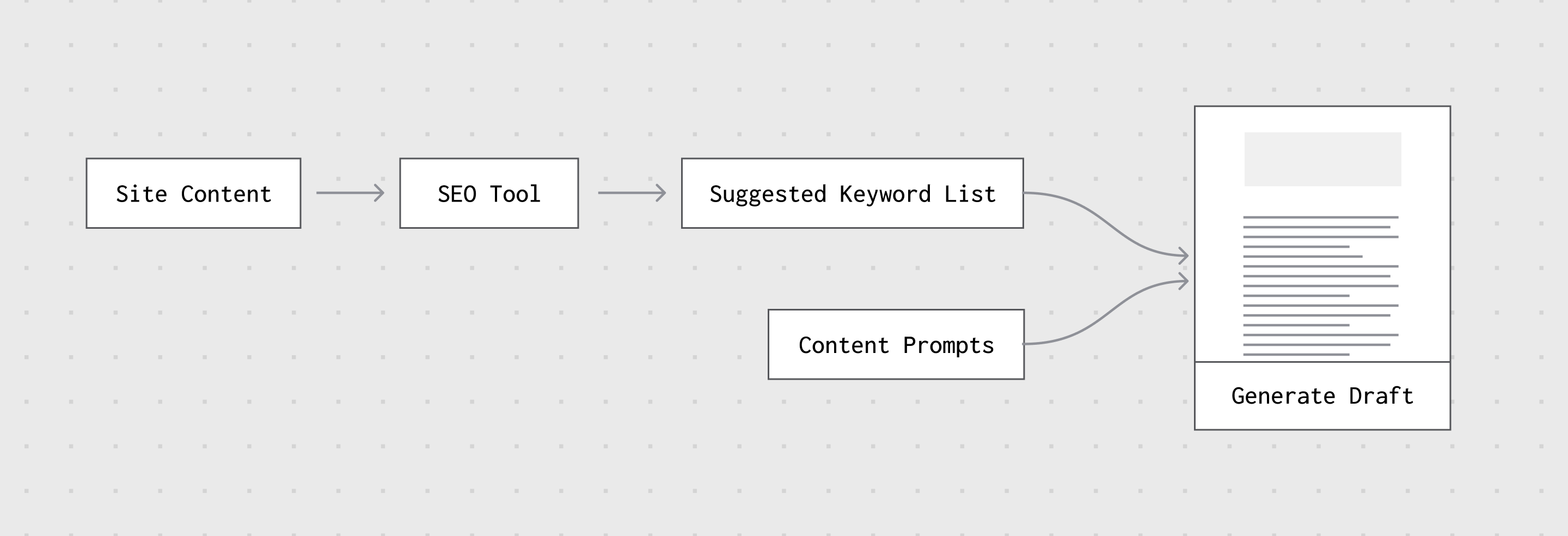
This took iteration. Early outputs had to be tested, adjusted, and compared against the kind of content that would actually be valuable to a search visitor. Over time, the workflow became more reliable. The GPT assistant could take a keyword or topic direction and produce a solid first draft that matched the desired tone and structure closely enough to avoid a full rewrite.
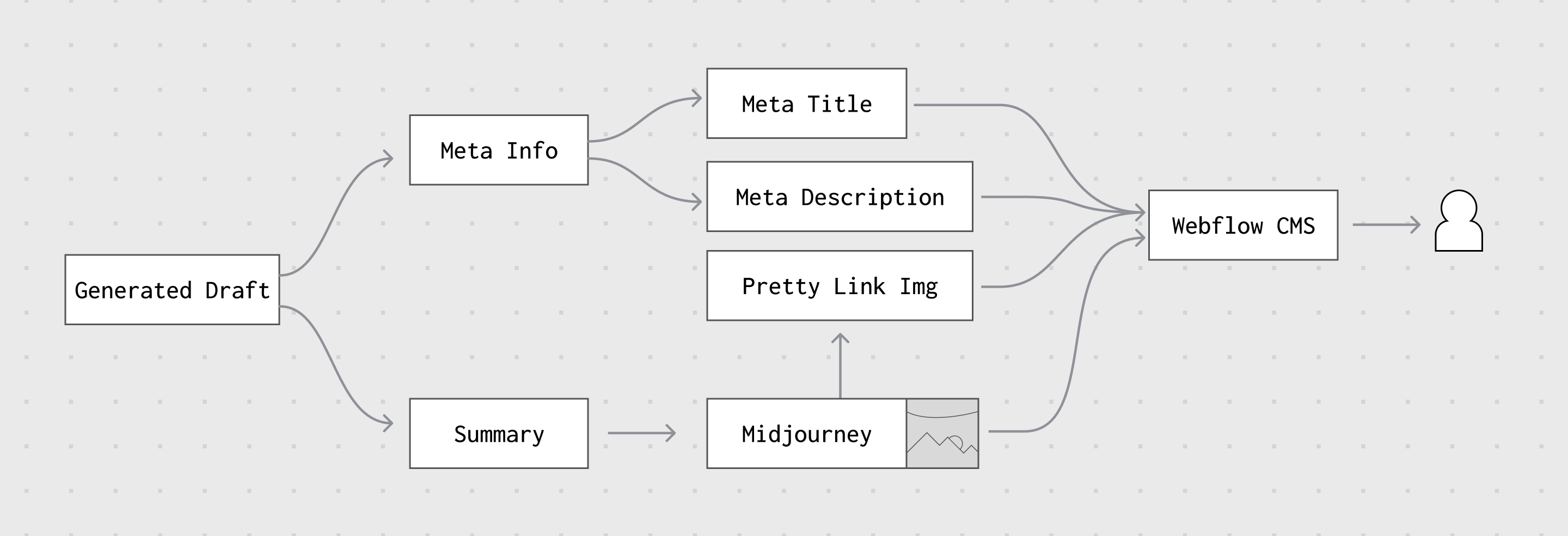
Once the written content was generated, the next step was turning it into structured CMS content for Webflow. Each article needed to become a CMS item with the appropriate title, summary, body copy, metadata, and supporting fields.
Most of this structure could be prepared through automation. The workflow made it possible to generate the core parts of each post in a consistent format, reducing the amount of repetitive manual entry required. At the time, the main limitation was Webflow’s API handling of rich text fields, which meant the markdown body content still had to be manually placed into the rich text field for each post.
That manual step was not ideal, but it did not undermine the system. The larger workflow still reduced the amount of time required to plan, draft, structure, and prepare each post. Instead of treating every blog post as a standalone effort, the process created a repeatable pipeline.
A simplified version of the workflow looked like this:
The system was intentionally not fully automated. That was part of the point. It created speed and structure, but still left room for judgment.
A human review step was built into the process before publishing. This was less about rewriting everything and more about making sure the content was actually worth publishing.
Each article was reviewed for clarity, relevance, and basic usefulness. CTAs were checked and adjusted. Links were reviewed to make sure they pointed to the right places. Any awkward AI phrasing, incorrect references, or overly generic sections could be corrected before the post went live.
This quality-control step was critical. Without it, the content could easily drift into generic “AI blog” territory. With it, the articles stayed grounded in the actual needs of Stacked.camp’s audience. The workflow used AI to accelerate production, but it still relied on human judgment to protect the brand and improve the usefulness of the final output.
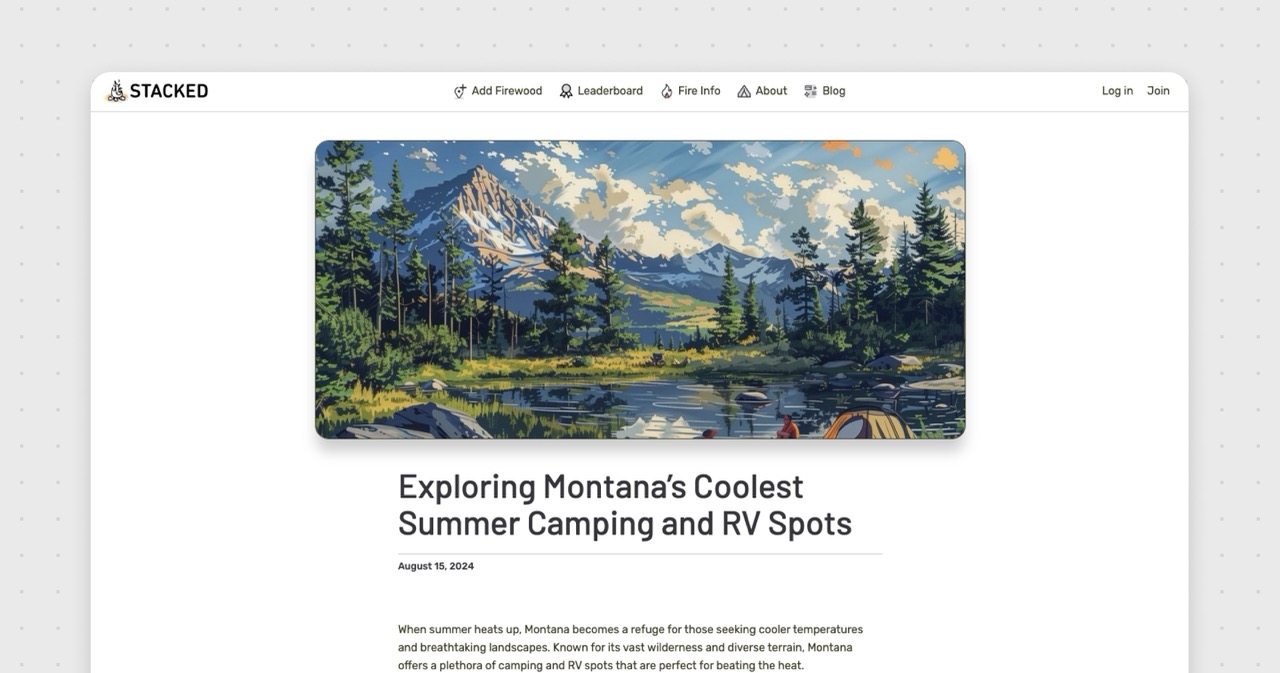
After the content workflow was in place, the next opportunity was visual presentation. Each blog post needed a hero image, thumbnail, and metadata image for sharing. Rather than relying on stock photography, we used Midjourney to generate custom illustrations for the articles.
%20Large.jpeg)
The intended style was warm, hand-drawn, and outdoors-focused. It had a slight storybook quality — not quite comic book, but closer to an illustrated field guide or nostalgic adventure scene. Some images showed firewood on the forest floor. Others showed family camping scenes, mountain landscapes, RV trips, or cozy outdoor settings.
This visual system did more than make the blog posts look better. It helped define a broader tone for the Stacked.camp brand. The illustrations became the hero images for articles, the thumbnails in content listings, and the images used in social metadata. Over time, the same style also appeared in other parts of the product and marketing experience, including login screens and supporting brand moments.
What began as a practical solution for blog imagery became a broader creative direction. The AI-assisted content system did not just produce articles — it helped shape how the brand looked and felt.
The results were steady and meaningful. The site grew from a few hundred monthly visitors to roughly 2,000–3,000 monthly visitors, driven largely by the broader SEO and content strategy.
That growth did not come from one viral article or one isolated campaign. It came from building coverage across many related topics that were useful to the target audience. The site became more discoverable, the location pages had more contextual support, and the content library gave Stacked.camp more surface area in search.
The project also created operational value. Instead of asking, “What should we write next?” the team had a repeatable way to identify topics, generate drafts, review content, create imagery, and publish into Webflow.
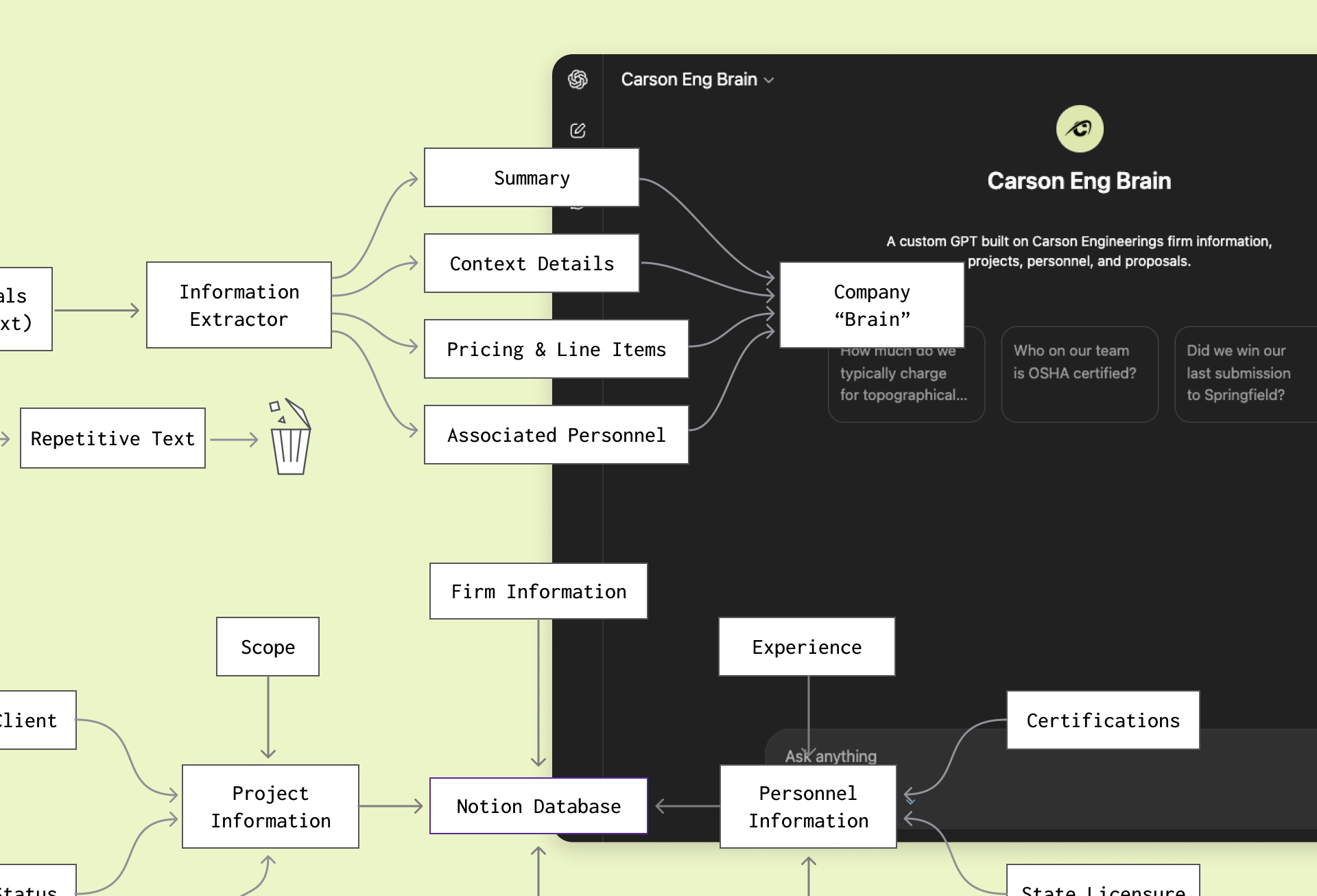
The result is a tool that helps the team produce content across multiple formats while reducing the inconsistency that often comes from one-off AI usage.
Key components included:
A simple content creation interface
Content-type-specific prompt frameworks
A company knowledge base built from brand, content, and competitive materials
Admin controls for updating prompts and knowledge sources
Markdown-based outputs for review and editing
A workflow designed to support eventual publishing in WordPress
The biggest change was not that the team gained access to AI. They already had that.
The real change was that AI became easier to use consistently.
Before, each user had to bring the context themselves. They had to know what to ask, how to ask it, and what brand rules to remember. After the content engine, much of that context was built into the system. The user could focus on the content need, while the tool handled the structure around it.
That made the experience feel less like starting from scratch and more like working inside a branded content system.
For a small marketing team, that kind of structure can make AI feel less experimental and more dependable. It creates a practical bridge between the power of an LLM and the day-to-day needs of a team that simply wants to create better content faster.
The most important outcome was not simply that AI made content faster. It was that AI became part of a structured creative and marketing workflow.
For Stacked.camp, AI helped with keyword-driven ideation, blog drafting, image generation, and visual exploration. But the system worked because it had constraints: a defined audience, a clear tone, a CMS structure, a review process, and a visual direction.
Used poorly, AI content can become generic very quickly. Used carefully, it can help a small team create useful, search-friendly content at a pace that would otherwise be difficult to sustain. In this case, the workflow became more than a shortcut. It became a scalable content engine — one that supported organic growth, improved site depth, and helped establish a more distinctive visual identity for the brand.




-2000.webp)
-1200.webp)